Why Global Sample Management Has Become a Strategic Priority
Drug discovery has become increasingly distributed. Virtual biotechs, pharmaceutical companies, CROs, CDMOs, academic collaborators, and technology partners now work together across multiple locations, organizations, and time zones.
As outsourcing continues to grow, organizations gain access to specialized expertise, advanced technologies, and scalable laboratory capacity. However, these benefits introduce a new challenge: maintaining visibility and control over samples that move across a complex network of partners.
While many organizations have improved internal data flows through automation, integrations, and cloud-based platforms, sample logistics between organizations often remain fragmented. Inventory data may be spread across different systems, sample requests are tracked manually, and stakeholders struggle to maintain a real-time view of where samples are located and how they are being used.
The question is no longer whether organizations can outsource research activities. The question is whether they can maintain complete oversight of their samples while doing so.
The Challenges of Managing Samples Across Multiple Organizations
When compounds, biological samples, reagents, and assay-ready plates are distributed across multiple CROs and research sites, several operational challenges emerge:
- Limited visibility into inventory across organizations
- Delays caused by manual communication and disconnected workflows
- Difficulty tracking sample movements and shipping status
- Security concerns when sharing information with external partners
- Lack of real-time inventory updates
- Challenges maintaining audit-ready records and traceability
As research programs accelerate, these challenges become increasingly difficult to manage using spreadsheets, email chains, or disconnected laboratory systems.
Organizations need a way to coordinate sample requests, inventory updates, shipping activities, and operational workflows across their entire research ecosystem.
From Fragmented Logistics to Connected Sample Operations
One of the biggest shifts in modern sample management is moving from isolated inventory systems to connected sample operations.
In many organizations, a sample may be:
- Registered at one location
- Stored by a CRO
- Processed through an automated workflow elsewhere
- Screened at another facility
- Analyzed by a different team
Without a connected operational framework, each handoff introduces risk, delays, and potential data gaps.
Connected sample management allows CROs to manage the entire sample lifecycle through a shared operational layer. Inventory updates occur in real time. Sample requests are routed automatically. Shipping activities are tracked. Every action is recorded and traceable.
This approach provides both operational efficiency and the data foundation needed for future automation and AI-driven decision-making.
Creating Global Visibility Without Compromising Security
A major challenge in outsourced research is balancing collaboration with confidentiality.
CROs must ensure that one customer's inventory cannot be viewed by another customer. Biotech companies need visibility into their outsourced samples while restricting access to only the relevant partner organizations.
Modern sample management platforms address this challenge through role-based access controls, secure authentication, and controlled data-sharing frameworks.
The result is a shared environment where organizations can collaborate effectively while maintaining strict data security and governance requirements.
Agios Pharmaceuticals: Managing Inventory Across Multiple CROs
Agios Pharmaceuticals provides a strong example of how biotech companies can maintain visibility across a distributed research network.
Agios works with multiple CRO partners across the United States, Europe, and Asia while maintaining inventory at several external locations. Before implementing Cenevo’s Mosaic, the compound management team lacked a unified view of inventory requests and sample movements across these partners.
By bringing CRO partners into a shared Mosaic environment with carefully controlled access permissions, Agios gained real-time visibility into inventory held across multiple organizations. CRO users can only access inventory relevant to their own site, while Agios maintains a complete global view of sample availability and activity.
This visibility has enabled the team to better understand inventory consumption patterns, improve planning, and make more informed decisions about how samples are distributed across projects and locations.
👉 Read the Agios case study here.
Eliminating Time Lags Across Distributed Research Networks
One of the most common challenges in global sample management is the delay between an action occurring and inventory records being updated.
When lab inventory synchronization relies on spreadsheets, file transfers, or manual updates, organizations risk making decisions based on outdated information.
Real-time synchronization between users, locations, and workflows helps ensure that everyone is working from the same data. This improves planning, reduces errors, and provides confidence that inventory records accurately reflect current stock levels and sample locations.
For organizations managing thousands of compounds across multiple partners, this level of synchronization becomes essential.
Supporting Automation and High-Throughput Screening
Global sample management is not only about inventory visibility. It also serves as the operational backbone for automated laboratory workflows.
Sygnature Discovery provides an example of how integrated sample management supports high-throughput screening operations.
When establishing a new in-house HTS capability, Sygnature integrated Mosaic with laboratory automation and screening data analysis systems. The resulting platform enabled automated inventory tracking, workflow orchestration, and seamless data exchange between systems.
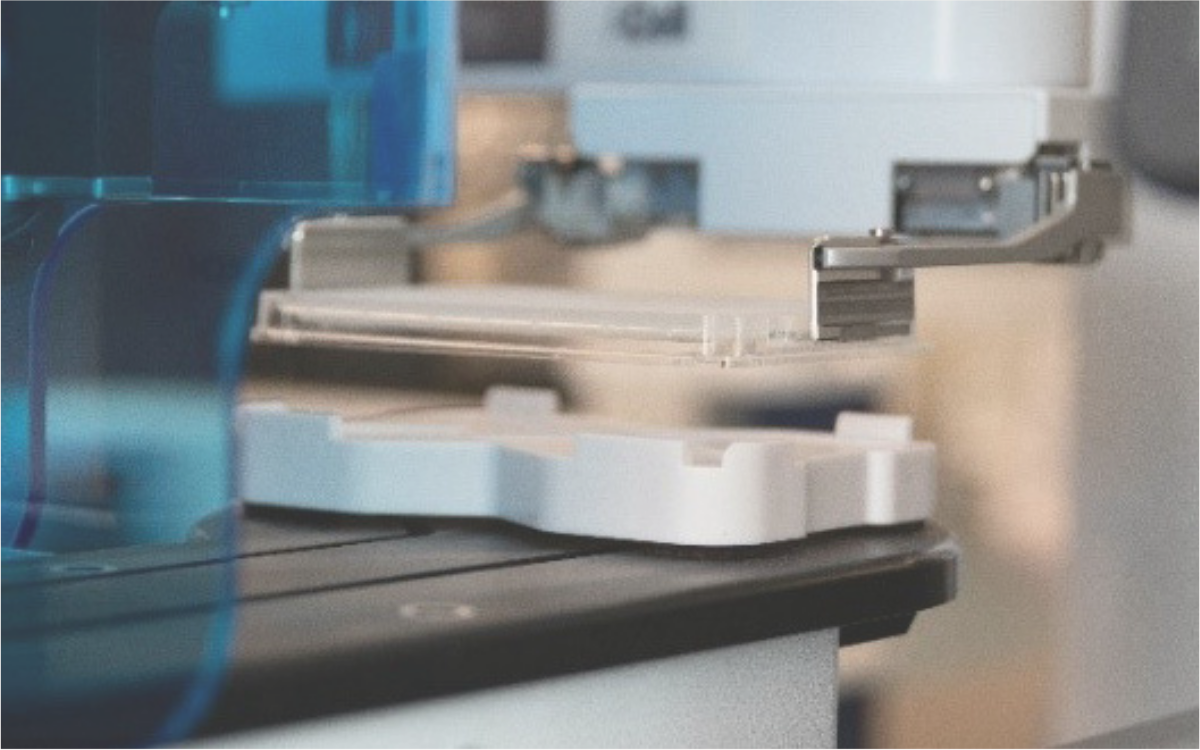 © Sygnature Discovery. Reproduced with permission.
Using this integrated approach, Sygnature screened 150,000 compounds in less than four weeks while maintaining robust assay quality metrics.
The project highlights how connected sample management enables organizations to scale operations while maintaining data integrity and traceability throughout complex screening workflows.
👉 Read the full Sygnature case study here.
Maintaining Compliance and Data Integrity Across Multiple Sites
As organizations expand their research operations, maintaining consistent processes across multiple sites becomes increasingly important.
This challenge extends beyond sample inventories. Laboratory data, equipment records, documentation, and operational workflows often become fragmented across locations, making it harder to maintain oversight and ensure regulatory readiness.
Pace Life Sciences, a leading CDMO and analytical laboratory services provider, faced this challenge as it sought to centralize laboratory documentation, inventory management, equipment records, and operational workflows across multiple facilities.
To support these goals, Pace implemented Cenevo’s Labguru, creating a unified platform for laboratory operations. The organization centralized audit-ready data, improved visibility across laboratory and inventory systems, and established scalable workflows capable of supporting continued growth.
Labguru helped Pace reduce manual documentation, strengthen data integrity through standardized workflows and audit trails, and provide greater visibility across multiple sites and teams. Direct instrument integrations and centralized records further improved accuracy, traceability, and compliance readiness.
While Mosaic helps organizations manage sample logistics and inventory across global research networks, Labguru extends this connected approach into laboratory operations, helping teams manage experiments, equipment, inventories, workflows, and compliance within a single environment.
Together, these capabilities support a more connected and efficient research ecosystem, enabling organizations to maintain visibility and control across both their samples and laboratory operations.
👉 Read the full Pace case study here.
Simplifying Sample Shipping and Tracking
The final piece of effective global sample management is the ability to coordinate and track sample shipments.
Moving samples between sites often requires coordinating multiple stakeholders while complying with international shipping regulations, hazardous material documentation requirements, controlled substance restrictions, and strict chain-of-custody procedures.
Without a structured process, shipments can become difficult to track and delays can impact critical research timelines.
Integrated sample management platforms help organizations manage shipping workflows while maintaining visibility into sample movements from origin to destination.
This ensures valuable research materials arrive at the correct location while preserving traceability throughout the journey.
The Future of Global Sample Management for CRO’s
Drug discovery is increasingly collaborative. Biotech companies, CROs, CDMOs, and research partners must work together across locations, organizations, and time zones while maintaining complete visibility of valuable samples.
Success depends on more than storing inventory data. Organizations need a connected sample management platform that brings together inventory tracking, sample requests, fulfillment, shipping, automation, and audit-ready traceability.
By providing a shared operational framework across distributed teams, Mosaic and Labguru help organizations maintain control, improve efficiency, and support the increasingly networked nature of modern drug discovery.
Ready to Improve Sample Visibility Across Your Research Network?
Discover how Cenevo helps biotech, pharmaceutical, CRO, and CDMO organizations manage inventory, coordinate sample logistics, and maintain complete oversight across global operations.
Speak with a Cenevo expert to learn how we can support your sample management strategy.

Originally published on www.titian.co.uk
%20(4).png)