As laboratories grow, sample storage quickly becomes more than simply finding room in a freezer. Research organizations today are managing larger sample volumes, more storage locations, increasingly diverse container types, and more complex workflows than ever before. At the same time, scientists are under pressure to improve reproducibility, maintain traceability, and move projects forward faster.
In many labs, sample storage management still relies heavily on spreadsheets, handwritten notes, or institutional knowledge passed between team members. These methods may work for a while, but they become difficult to maintain as operations scale. Samples are moved without records being updated, free space becomes difficult to track, and scientists spend valuable time searching for storage locations instead of focusing on research.
When it comes to managing sample storage space efficiently, there are three key considerations:
- Understanding storage locations
- Knowing where there is free space
- Knowing where specific sample and container types can be stored
Each of these areas provides value on its own, but together they form the foundation of a more scalable and efficient sample management strategy.
1) Understanding storage locations
What type of storage units are used in your lab?
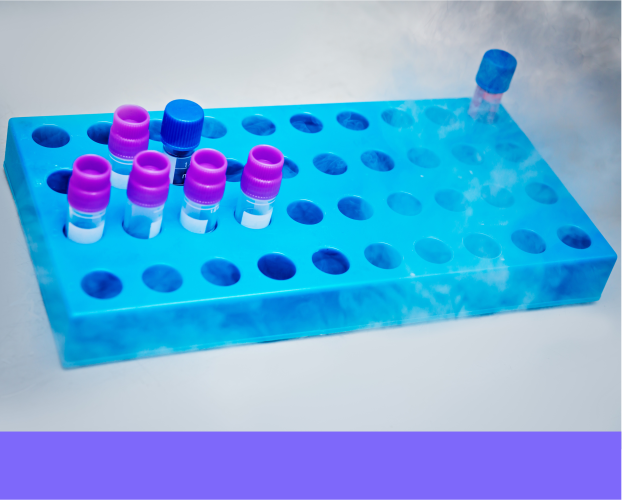
Freezers are likely to be the primary storage unit, but depending on the type of material being stored, laboratories may also use fridges, cupboards, drawers, incubators, LN2 tanks, or automated storage systems.
Within each storage unit, there may be a combination of shelves, racks, trays, or boxes, all with different layouts and capacities. To make the most efficient use of available space, laboratories need a clear understanding of how storage locations are structured, where samples are physically located, and how different storage systems are being used across the organization.
The best way to manage storage locations is through a digital representation of the storage environment so scientists always know what is stored where. Modern freezer and inventory management software can accurately model complex storage hierarchies while tracking sample movements in real time.
This becomes particularly important in larger laboratories where storage units are often distributed across multiple rooms, departments, or sites. LN2 tanks may be located in one area of the building while freezers and refrigerators are spread across several laboratories. Without a centralized system, maintaining visibility across these environments becomes increasingly difficult.
Modern sample management platforms do more than simply map freezer locations. Many can integrate directly with scanners, automated stores, liquid handlers, and orchestration systems to synchronize sample locations automatically as workflows are executed. This reduces manual data entry while improving inventory accuracy and sample traceability.
Storage layouts can be highly complex, so it is important to use a system capable of accurately representing your own laboratory environment rather than forcing teams to adapt to rigid storage structures.
2) Sample storage management- Knowing where there is free space
Do you know where there is available space in your storage units?
You may know where there is a free rack or shelf, but do you know how full each storage unit actually is and where there is still usable capacity across the lab?
Many laboratories still rely on visual inspections or spreadsheets to determine where samples can be stored. While manageable at smaller scales, these approaches become increasingly inefficient as sample volumes grow and multiple scientists interact with the same storage systems.
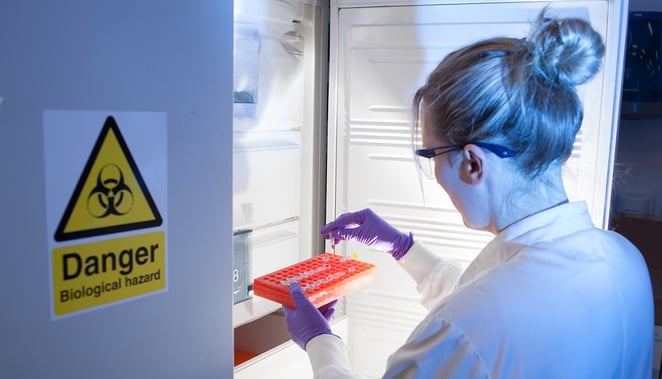
Visual inspections are particularly problematic in freezer environments, where doors should ideally remain open for as little time as possible. Anyone who has spent time pulling racks from an LN2 Dewar searching for space for a handful of newly created tubes understands how frustrating and time-consuming the process can become.
Spreadsheets present a different challenge. They depend entirely on users remembering to update records manually, which becomes difficult in busy laboratory environments. Over time, storage records drift away from reality, leading to misplaced samples, duplicate storage, and wasted capacity.
A dedicated sample management platform removes much of this uncertainty by automatically tracking movement in and out of storage locations. Scientists can immediately see where free space exists, which storage units are approaching capacity, and where partially filled racks or boxes can still be utilized efficiently.
In connected laboratory environments, inventory updates can happen automatically as samples move through workflows. Rather than relying on scientists to manually document every transfer, the system continuously updates storage records in real time. This not only improves operational efficiency but also creates a more reliable foundation for automation and downstream analytics.
3) Knowing where you can store specific sample and container types
Knowing where there is free space is one thing. Knowing where there is suitable space for specific sample and container types is another.
Most laboratories manage a wide range of container formats, including tubes, vials, flasks, microtiter plates, tissue blocks, and slides. Each may have different storage requirements based on size, temperature, workflow, or compatibility with existing racks and storage hardware.
Without clear visibility into compatible storage locations, scientists often waste time pulling out boxes or racks only to discover that the container type does not fit. These small inefficiencies accumulate quickly in high-throughput environments.
A modern laboratory freezer management system can automatically guide users to the most appropriate available location based on the type of sample or container being stored. Instead of relying on memory or manual checking, scientists can simply follow system recommendations and place items directly into suitable locations.
This becomes even more important in laboratories adopting automation. Automated workflows depend on structured, accurate inventory data and clearly defined storage rules to ensure robotic systems can retrieve, move, and process samples consistently.
As laboratories continue investing in automation and AI-enabled workflows, the quality and structure of inventory data become increasingly important. Well-managed sample storage not only improves day-to-day laboratory operations but also creates a stronger foundation for scalable automation, analytics, and future AI-driven laboratory processes.
4) Reducing Sample Loss and Retrieval Time
Poor storage management affects more than just the organization. It can directly impact productivity, turnaround times, and research quality.
Misplaced samples, duplicate aliquots, expired materials, and lengthy retrieval times create unnecessary delays and increase operational costs. In some cases, missing samples can force experiments to be repeated entirely.
Digital sample management systems help reduce these risks by maintaining complete traceability throughout the sample lifecycle. Every movement, retrieval action, storage change, and user interaction can be recorded automatically, creating a reliable audit trail across laboratory operations.
This level of traceability is increasingly important for regulated laboratories, CROs, and biopharma organizations where chain of custody, compliance, and audit readiness are critical operational requirements.
Efficient sample storage management is no longer simply about organizing freezer space. It is about creating a connected, scalable laboratory environment that allows scientists to move faster, maintain confidence in their data, and support increasingly automated ways of working.
With the right sample management system in place, laboratories can maximize storage capacity, reduce administrative overhead, improve sample traceability, and make day-to-day laboratory operations significantly more efficient.
To learn more about how Mosaic can help you be more efficient

Originally published on www.titian.co.uk
%20(4).png)